

Our Story
When a group of St. Paul social service agencies began gathering informally in the mid-90s, their mission was simple: to share information. All had roots in the settlement house movement, and they quickly discovered the value of collaboration. By 1997, they reached out to Minneapolis partners to expand their collective knowledge. In 1999, they formally incorporated as the Metropolitan Alliance of Community Centers, focused on peer learning, joint conferences, and leadership training.

How Our Journey Began
The early 2000s changed everything. Facing a $4.5 billion state shortfall, nonprofits braced for deep cuts. In this moment of crisis, a group of courageous MACC organizations chose to collaborate – not just to survive, but to increase their collective impact.
Thus began the MACC Alliance. Beyond sharing information, members explored bold initiatives like managed benefits, then took the unprecedented step of sharing staff. It was an act of self-determination: building the tools and resources the market couldn’t provide and funders wouldn’t invest in.
In 2005, MACC CommonWealth formed. For a decade, it pooled HR, IT, and other administrative expertise, giving nonprofits a strong back-office foundation so they could focus on their missions. As members’ needs evolved, combining forces made sense. In 2016, the organizations merged into the Metropolitan Alliance of Connected Communities (MACC).
Today, MACC still makes collaboration real – leveraging our network’s collective wisdom to build new solutions and a more equitable society.
Related Resources
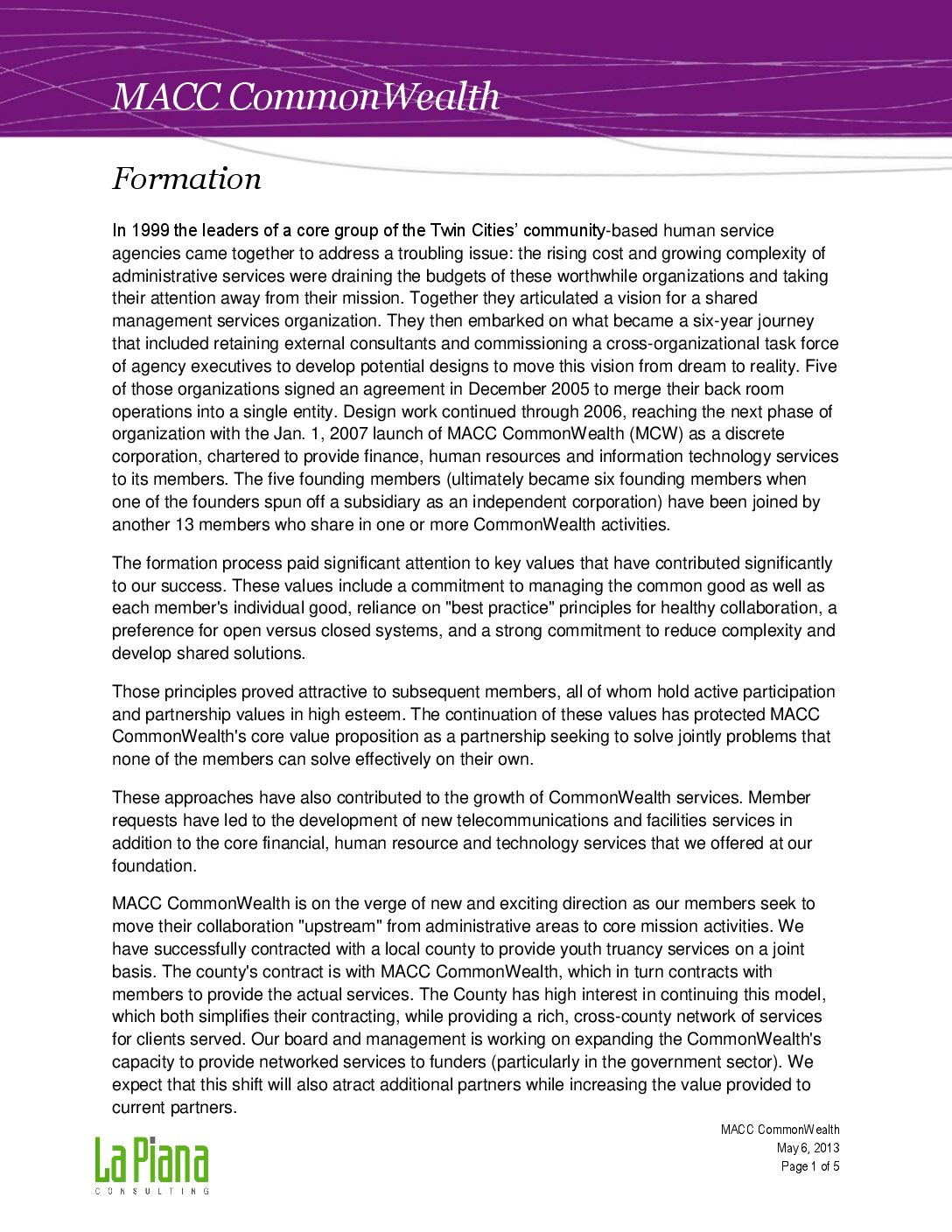
Case Study: MACC CommonWealth
Case study on MACC CommonWealth, founded in 2007 by Minnesota nonprofits, provides shared administrative services to reduce costs, improve quality, and support collaboration. It emphasizes standards, trust, and partnership, expanding into programmatic services like youth truancy. Its governance ensures equal member representation, fostering deep collaboration, scaling growth, and serving as a model for similar initiatives nationwide.
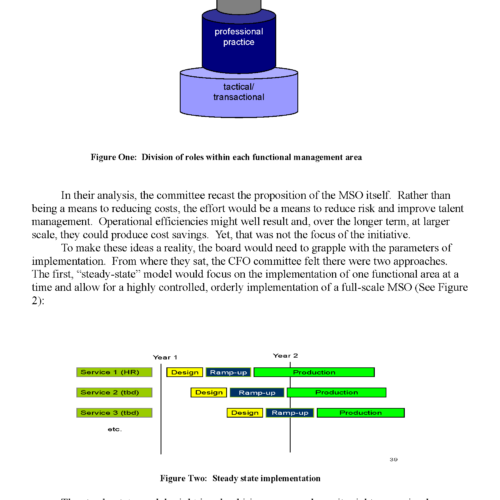
Trust as an Asset: Part A
Case Study on how MACC, a coalition of Minnesota nonprofits, aims to deepen collaboration by building trust, sharing administrative functions, and developing a managed service organization. Leadership emphasizes strategic growth, relationship-building, and shared values, but faces challenges balancing efficiency with social mission preservation, especially amid funding constraints and organizational diversity.
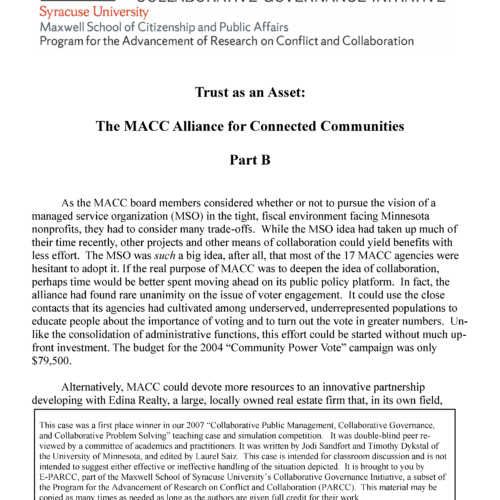
Trust as an Asset: Part B
Case study on how MACC explored forming a managed service organization to deepen collaboration, focusing on shared systems, legal structures, and trust. They chose a limited liability company to protect assets, emphasizing culture and mission engagement. Success depends on recruiting new members, with ongoing challenges in space, staff transition, and balancing costs, trust, and mission passion.
Our Journey
2026 + Beyond

2025

2020

2016

1990s
2013

2011

2010s

2007

2005
2000s
1999